
The rules of Three
Player Chess.
Everything you need to know - assuming you already know how to play chess.
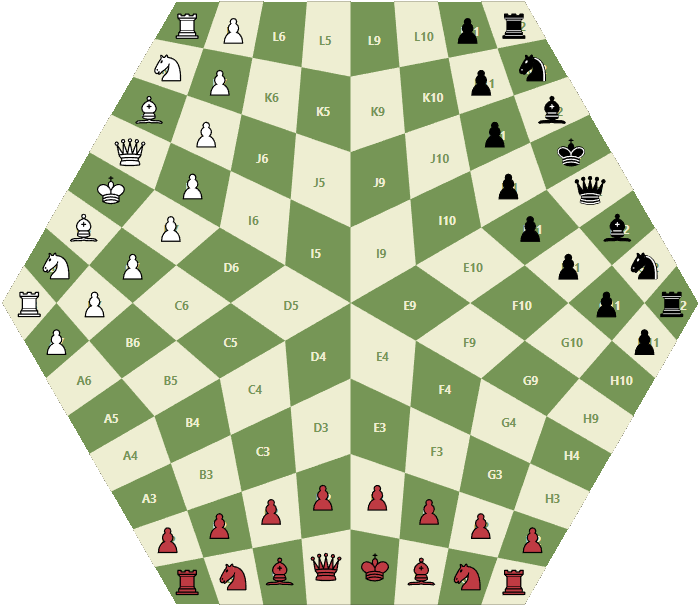
Check, Checkmate and Stalemate
For the most part, Check, Checkmate and Stalemate work similarly to normal chess, with slight variations to accommodate three players:
- Check - A player in Check must move out of check.
- Stalemate (3 players) - If all players are undefeated, the turn is skipped.
- Stalemate (2 players) - The game ends as a draw.
- Checkmate - Eliminates a player. The game continues until one king remains.
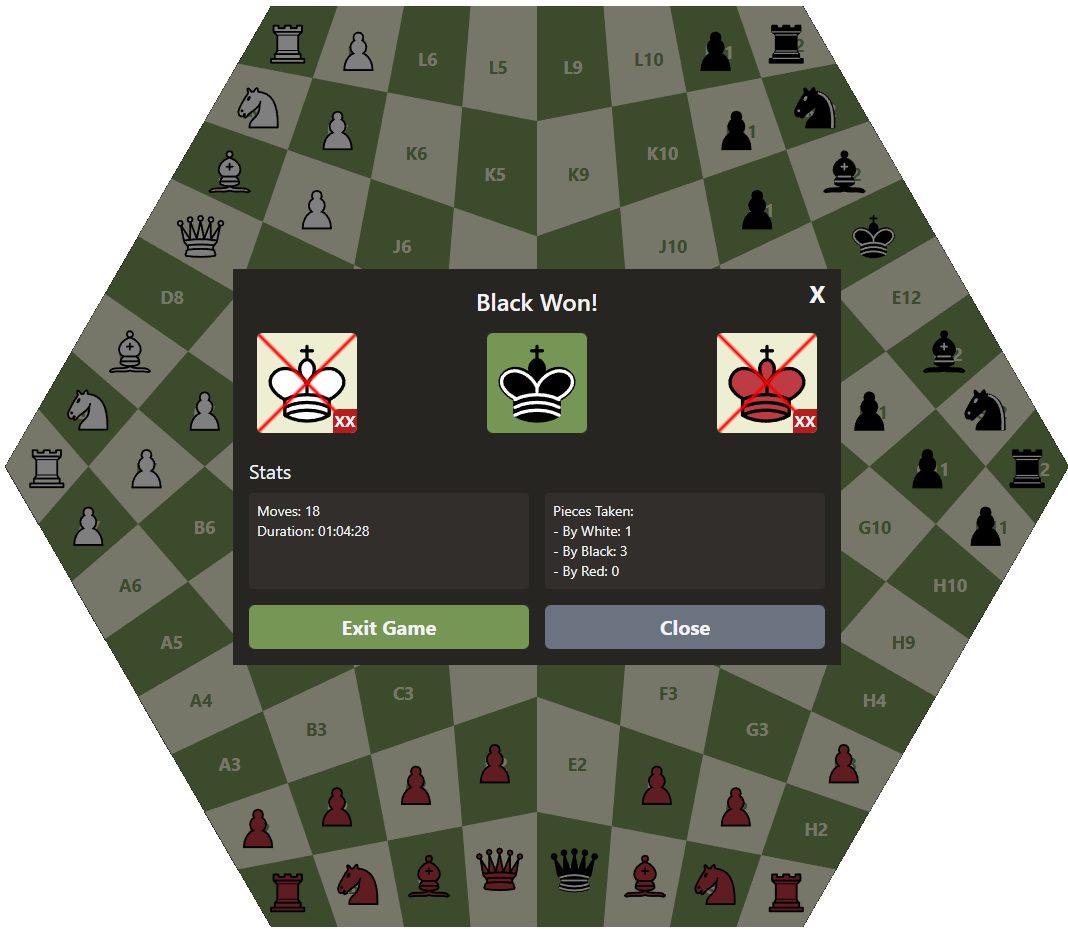
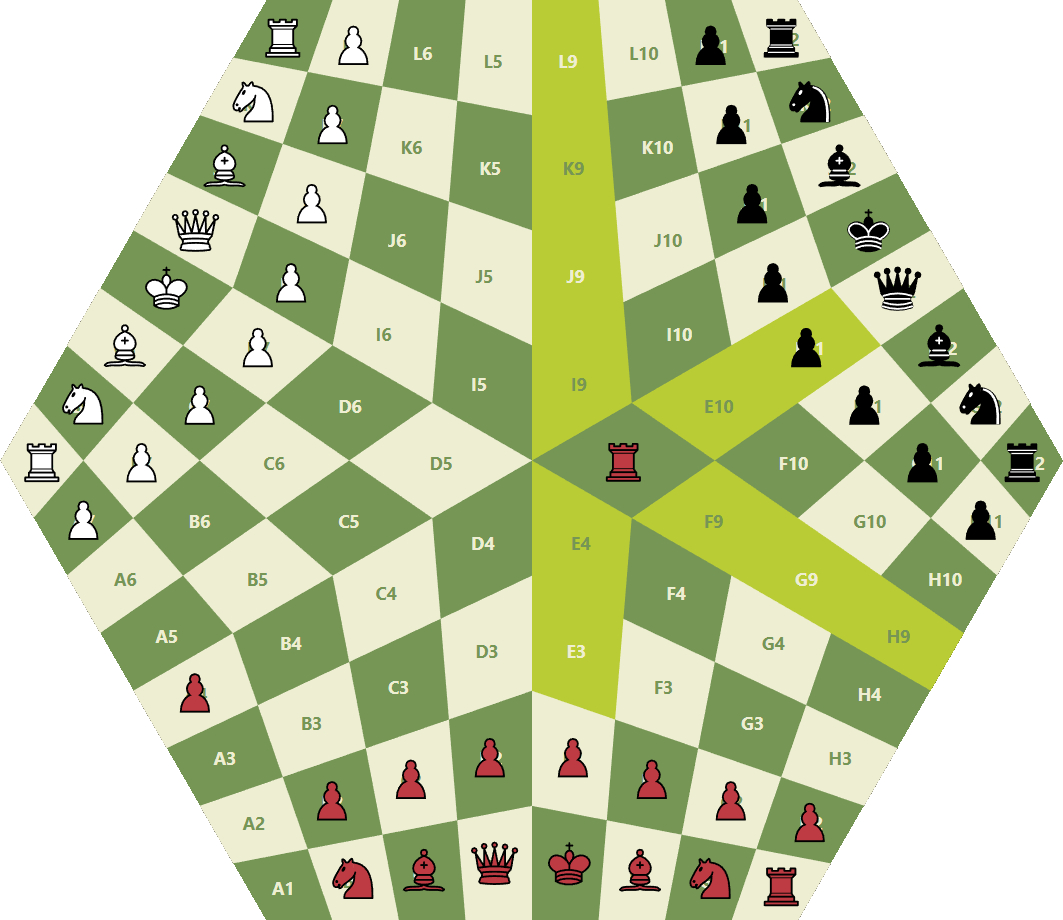
Straight Movement
- Vertical - Follows straight vertical lines. When passing through the center, the angle shifts to follow the file.
- Horizontal - Follows straight horizontal lines, rotating about the center on the same row.
Diagonal Movement
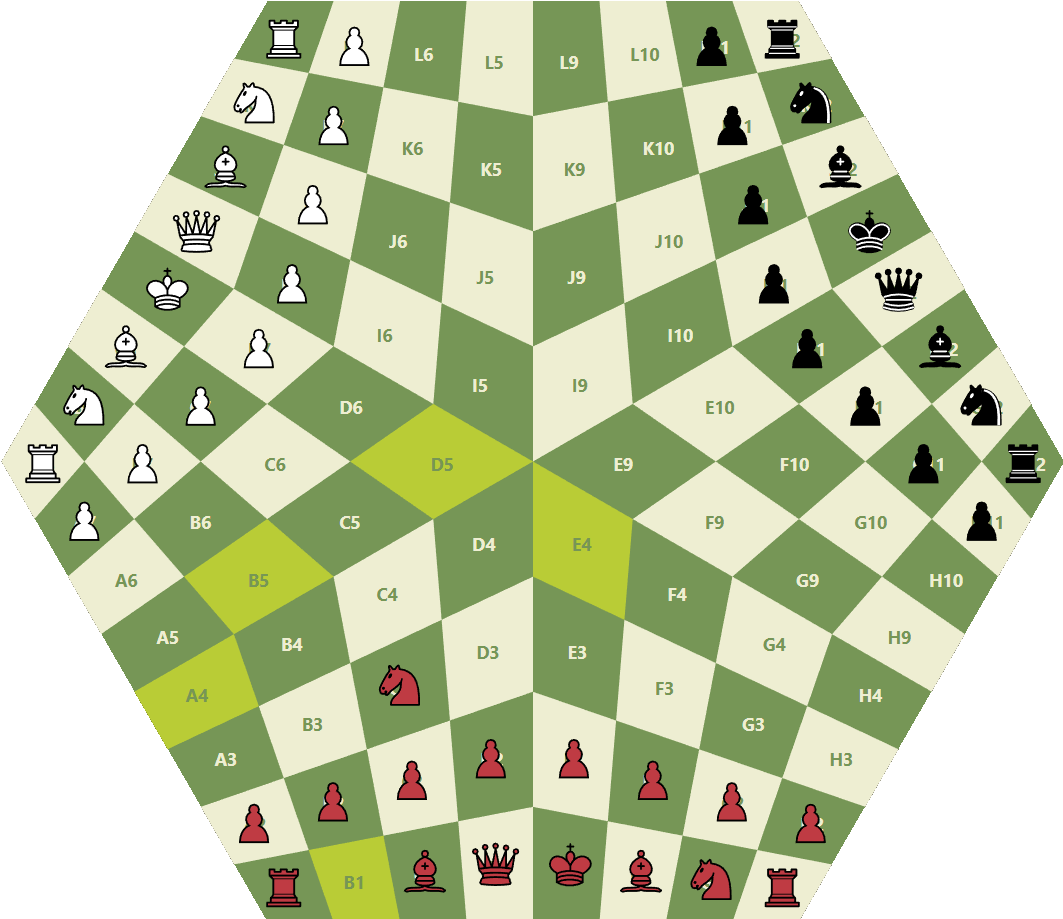
Diagonal movement works as in classic chess for the most part.
When moving through the center, the player can choose which path to follow along the same tile colour.
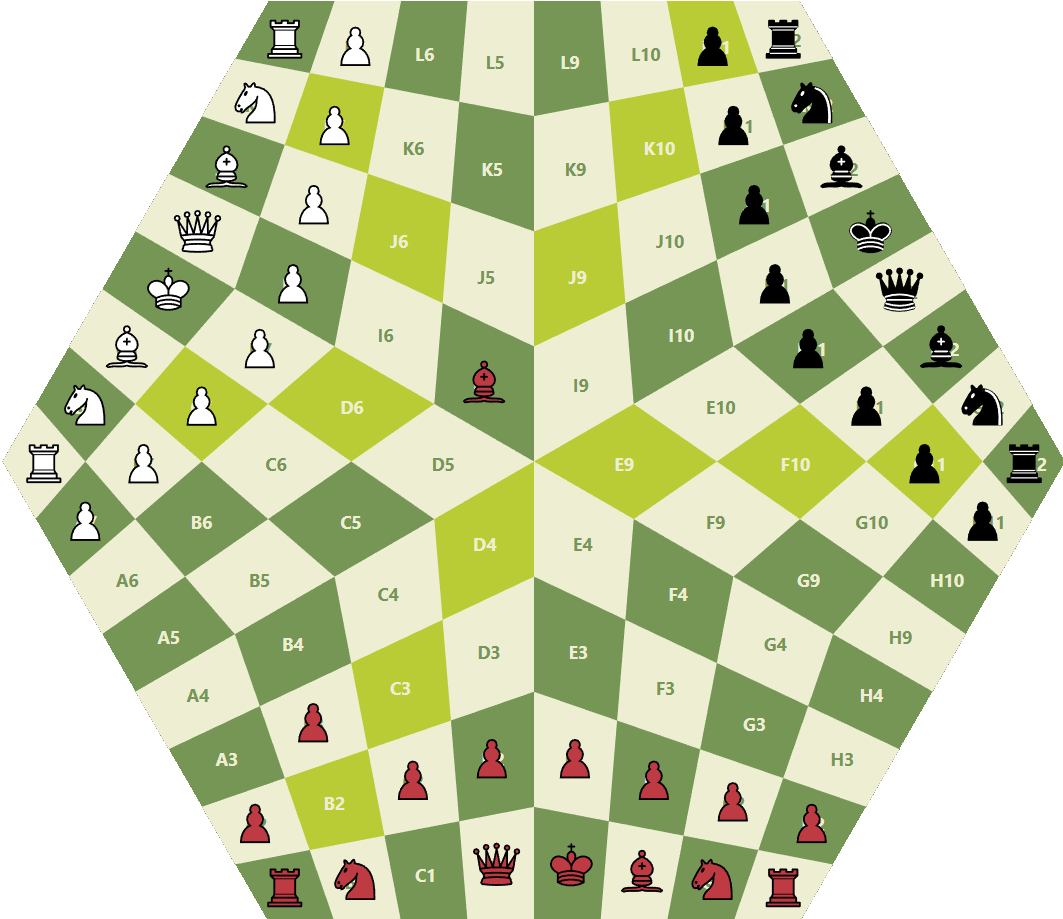
Knight Movement
The knight moves one square in one orthogonal direction, then two in the other - exactly as in standard chess.
Around the center of the board, this can give the knight more than the usual eight possible squares.
Castling
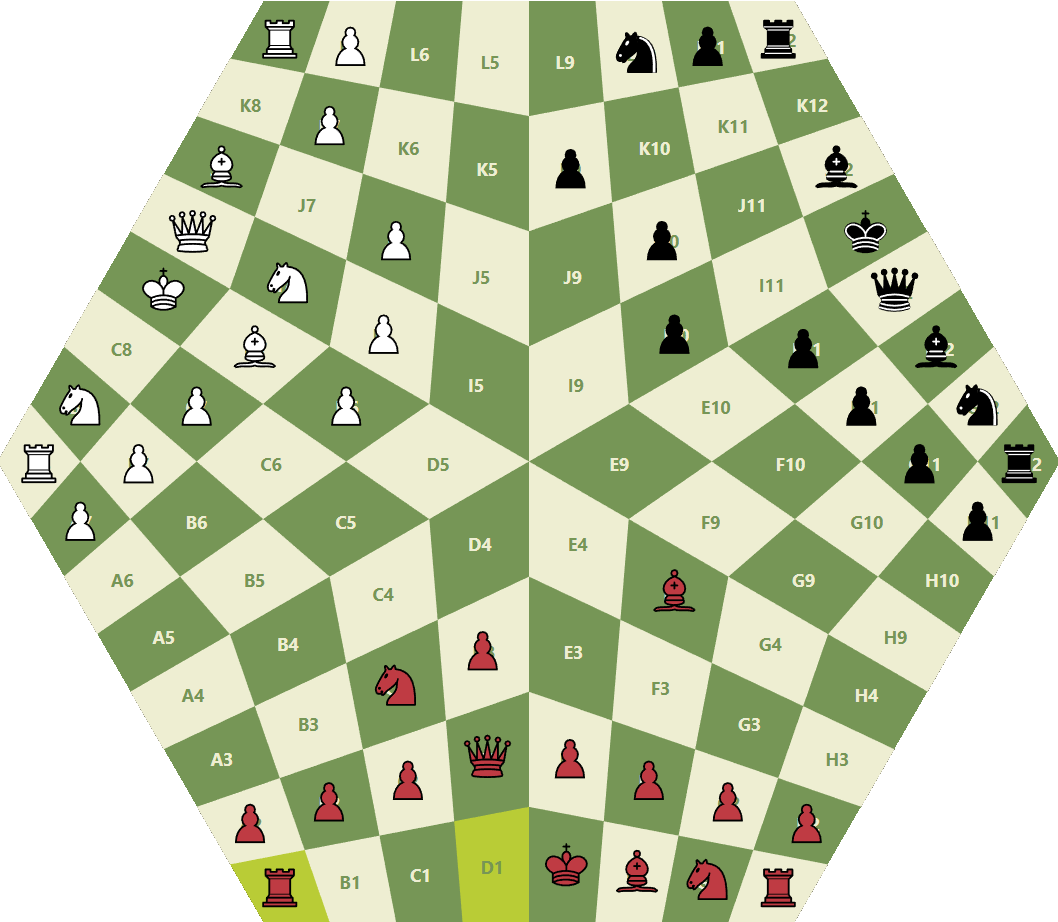
Castling is valid, just as in standard chess.
Select your King to see valid moves - if castling is available, select the Rook to perform it.

Turn Indicators
The current turn is shown by the turn indicators - green highlights the active player.
Turn order: White → Black → Red.
Player Status
- Check - The player is in Check.
- Stalemate - The player is in Stalemate. If 3 players are still in play, the turn is skipped. If only 2 players remain, the game ends as a draw.
- Checkmate - The player has been checkmated or defeated.

When a King can be taken
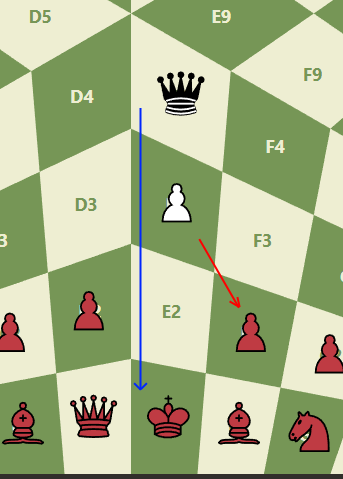
On occasion it is possible for a King to be taken in three-player chess. Consider: the White Pawn takes the Red Pawn, leaving the Red King in check by the Black Queen.
So what happens?
The Black Queen has the option to take the Red King, eliminating the Red player from the game.
Ready to put the rules
into practice?
Jump straight into a game and try it for yourself.